
Proprioception: Your Body's Hidden Sixth Sense
Proprioception is the silent sense that tells you where your body is in space. Learn why it fades with age, how your spine powers it, and simple ways to train it for lifelong balance.
Close your eyes and touch your finger to the tip of your nose. You just did something extraordinary — you located a moving body part in space without looking at it. That ability has a name: proprioception, your body's sixth sense. It works quietly in the background every second of your life, and when it fades, the consequences are anything but quiet.
In my office in Bernardsville, I often ask patients to stand on one foot with their eyes closed. The reactions tell me a great deal. Some hold steady and grin. Others wobble within two seconds and reach for the wall, surprised at how quickly their body lost its bearings. That little test is a window into a sensory system most people have never heard of — and one that has more to do with healthy aging, back stability, and freedom from injury than almost anything else I can measure.
What Proprioception Actually Is
Vision, hearing, taste, smell, touch — we all learn the five senses in grade school. But there is a sixth, and your nervous system relies on it constantly. Proprioception (from the Latin proprius, "one's own") is your brain's continuous, real-time map of where every part of your body is, how it's moving, and how much force your muscles are producing.
This map is built from millions of tiny sensors woven into your muscles, tendons, joints, and ligaments. Muscle spindles detect how fast and how far a muscle stretches. Golgi tendon organs measure tension and protect against overload. Joint and ligament receptors report angle and position. All of this streams up your spinal cord to the brain, which blends it with signals from your inner ear (balance) and your eyes (vision) to keep you upright and coordinated — without you ever thinking about it.
It's why you can walk down stairs in the dark, bring a fork to your mouth during a conversation, or catch yourself the instant you trip on a curb. It's the reason a skilled carpenter can swing a hammer without watching the nail, and why a child eventually rides a bike without falling. Proprioception is the difference between moving through the world and constantly fighting it.
• 1 in 4 — Adults over 65 falls each year in the U.S.
• 24% — Fewer falls with regular balance & functional exercise
• 75% — Of adults over 70 have measurable balance impairment
The Sense That Fades Quietly
Here's the part that should get our attention: proprioception declines with age — and even faster with inactivity. The sensors themselves become less numerous and less sensitive. Nerve conduction slows. The brain regions that integrate all this information process it a little less crisply. Research finds that somewhere between 30 and 50 percent of people over 65 have some difficulty with balance, and that figure climbs steeply with each decade.
This decline is dangerous precisely because it's invisible. No one feels their proprioception slipping the way they feel a sore knee. Instead, people simply start to feel "less sure" on uneven ground, take the handrail a little more often, or stop trusting themselves in the shower. Then one day a rug edge or a wet step produces a fall — and for an older adult, a fall is not a minor event. It is one of the leading causes of lost independence, fractured hips, and the cascade of decline that often follows.
But here is the hopeful truth, and the reason I keep this topic close: proprioception is trainable at any age. Unlike many things that erode over the years, this sense responds to practice quickly and dramatically. The nervous system is plastic. Challenge it, and it sharpens.
The Spine Is a Proprioceptive Powerhouse
As a chiropractor, I pay special attention to one fact that rarely makes it into the conversation: your spine is one of the richest sources of proprioceptive information in your entire body. The small joints of the spine — especially in the neck — are densely packed with mechanoreceptors. The deep muscles around each vertebra are loaded with muscle spindles, far more than the large muscles of the arms or legs.
That means your spinal column isn't just a stack of bones holding you up; it's a finely tuned sensory antenna constantly telling your brain how your head and trunk are oriented against gravity. When spinal joints move well and the surrounding muscles are healthy, that signal is clean and strong. When joints become restricted, stiff, or irritated — from injury, poor posture, or years of sitting — the signal degrades. The brain receives a fuzzier picture of where you are, and balance, coordination, and reaction time all suffer.
This is one of the underappreciated reasons spinal care matters beyond pain relief. Restoring healthy joint motion doesn't just feel good; it can refresh the proprioceptive feedback your nervous system depends on. Patients frequently tell me they feel "more grounded" or "steadier on my feet" after care, and the neurology behind that experience is real.
Signs Your Proprioception May Need Attention
• You can stand on one leg, eyes open, for 30+ seconds with ease — a healthy sign.
• You wobble noticeably within 10 seconds, or can't do it with eyes closed — worth training.
• You reach for support on stairs, feel unsure in the dark, or have had a recent stumble — address it now.
How to Train Your Sixth Sense
The beautiful thing about proprioceptive training is that it requires no gym, no equipment, and only a few minutes a day. The principle is simple: gently challenge your balance and your body's position sense, safely and consistently. Here is how I guide patients to build it, progressing only when each stage feels secure.
• Weeks 1–2 · Build the Base: Stand on one foot near a counter while brushing your teeth, switching legs halfway. Aim for steady, eyes open. This alone re-engages dozens of stabilizing reflexes twice a day.
• Weeks 3–4 · Remove a Crutch: Repeat single-leg stands, but lightly close your eyes for a few seconds at a time. Removing vision forces your muscle and joint sensors to do the work — the heart of proprioceptive training.
• Weeks 5–6 · Add Movement & Surface: Try heel-to-toe "tightrope" walking across a room, or stand on a folded towel or cushion to add instability. Reaching slowly in different directions while balancing trains dynamic control.
• Ongoing · Make It Part of Life: Tai chi, yoga, dancing, hiking on uneven trails, and barefoot time on safe surfaces all keep the system rich and adaptable. Consistency matters far more than intensity.
• 🧍 Single-Leg Stands: The foundation. Anywhere, anytime, no equipment — just a wall within reach for safety.
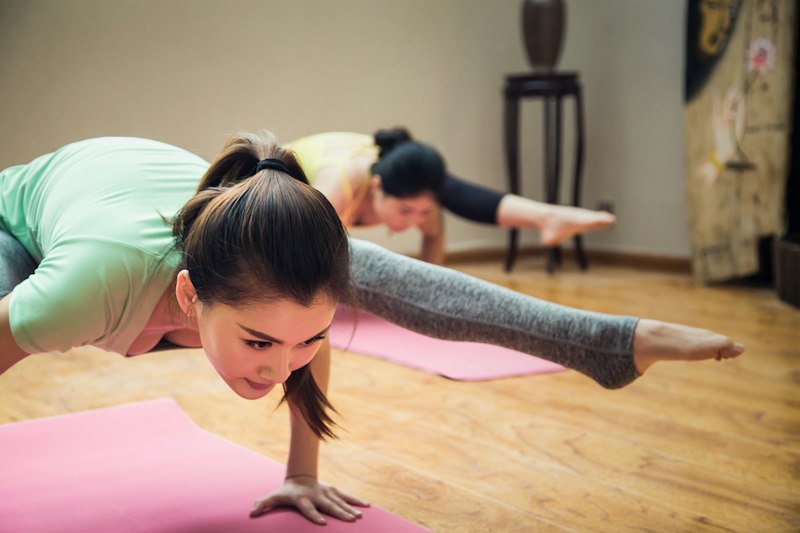
• 🧘 Tai Chi & Yoga: Slow, deliberate weight shifts are proprioceptive gold and reduce fall risk in study after study.
• 👣 Barefoot Time: Going shoeless on grass or carpet wakes up the hundreds of sensors in your feet.
• 🏛 Uneven Terrain: Trail walking and grass beat flat treadmills for challenging your balance system.
Doctor's Tip
Always train balance near a stable surface — a kitchen counter, a sturdy chair, a doorframe. The goal is to challenge your system, not to risk a fall. If you feel genuinely unsteady or have had recent falls, get assessed before progressing on your own. A few guided sessions can make all the difference.
A Sense Worth Protecting
We spend enormous energy protecting our eyesight and hearing, and rightly so. Yet proprioception — the sense that keeps us upright, coordinated, and confident in our own bodies — rarely gets a thought until it falters. That's a mistake worth correcting. The few minutes you spend balancing on one leg today are a direct investment in walking confidently, playing with grandchildren, and living independently decades from now.
Your body has been quietly tracking itself through space your entire life. Give that remarkable system a little attention, keep your spine moving well, and it will keep you steady for the long road ahead.
Feeling Less Steady Than You'd Like?
At AHPTS, we assess balance, spinal motion, and nervous-system function as part of whole-body care — and build a plan to keep you strong and confident on your feet. Let's check your foundation.
Schedule Your Visit