
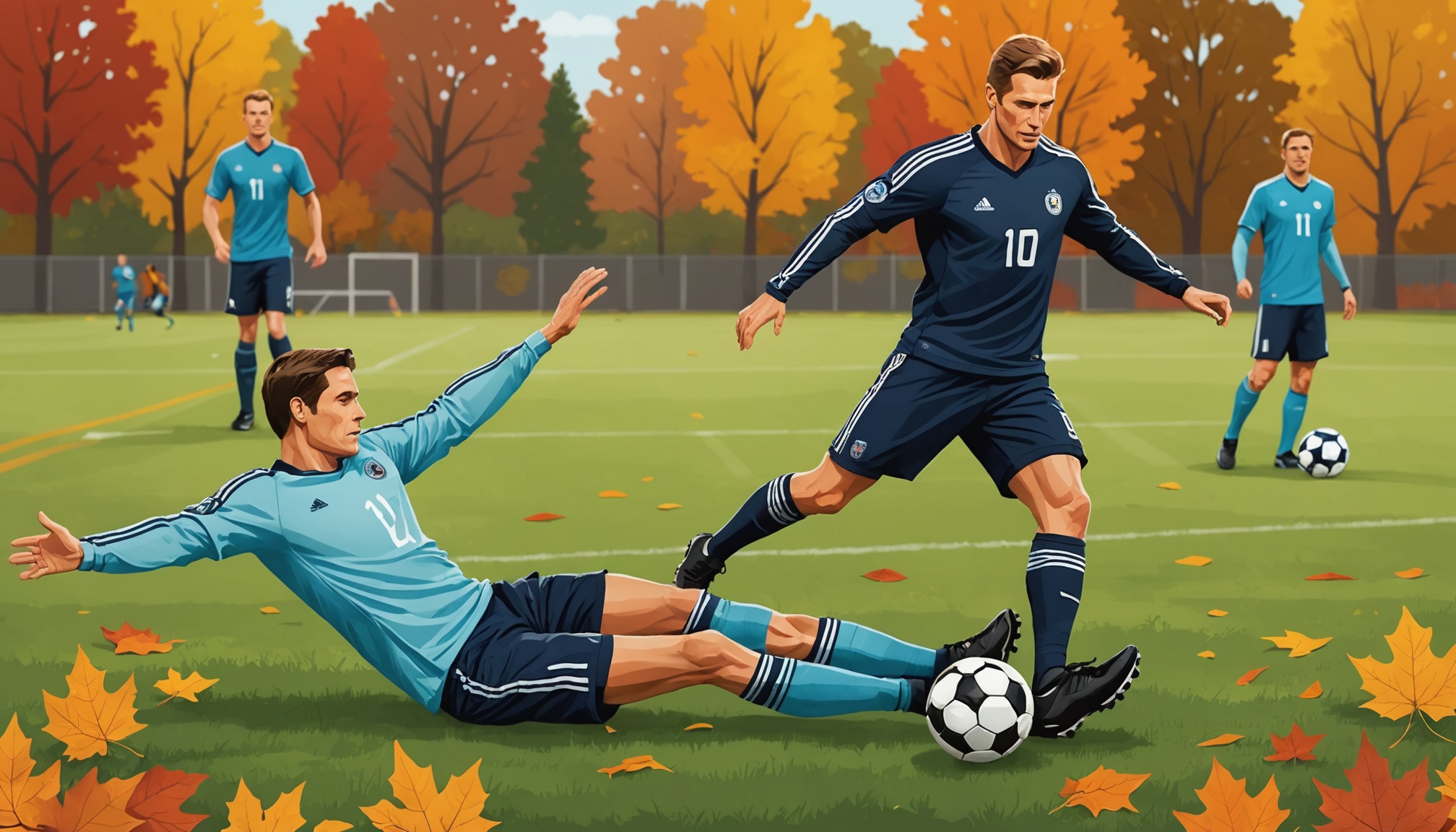
Autumn on the Field: Managing Soccer and Football Injuries
Fall sports season brings excitement — and a rise in sprains, strains, and overuse injuries. Learn which injuries show up most and how to stay in the game longer.
Why Fall Sports Season Demands Extra Attention
As temperatures drop and leaves change, soccer pitches and football fields fill back up. Autumn marks the heart of the competitive season for both sports, which means athletes of all ages are logging more hours of practice, scrimmages, and games than at almost any other time of year. That increase in volume, combined with the physical demands of these sports, creates a predictable window when soft-tissue and joint injuries tend to spike.
Understanding why these injuries happen — and what the body goes through during high-intensity field sports — is one of the most useful things an athlete or sports parent can learn before the season hits full stride.
The Most Common Injuries in Soccer and Football
Both sports share a similar injury landscape even though their rules and contact levels differ considerably.
Ankle sprains are among the most frequently seen injuries in soccer. Cutting, planting, and landing on uneven ground can roll the ankle inward, stretching or partially tearing the lateral ligaments. Research suggests that a history of ankle sprains is one of the strongest predictors of future sprains, which is why proper rehabilitation — rather than simply waiting for the pain to settle — matters so much.
Hamstring strains show up regularly in both sports. Explosive sprinting places enormous eccentric demand on the hamstrings, and fatigue compounds that risk significantly as a match or practice progresses into the second half. Many athletes feel a sharp pull in the back of the thigh when the muscle is asked to decelerate the leg at high speed.
Football introduces a heavier contact element, which brings its own patterns:
- Knee ligament injuries (ACL, MCL) from awkward tackles or sudden direction changes
- Shoulder separations and rotator cuff strains from blocking, tackling, or breaking falls
- Cervical strains — sometimes called stingers — from direct contact to the head and neck region
- Turf toe in linemen and skill players who push off hard from a bent-toe position
Soccer-specific concerns also include groin strains from wide kicks and lateral lunges, and patellar tendinopathy (sometimes called jumper's knee) from the repetitive jumping and landing common in heading contests and goalkeeper play.
The Role of Fatigue and Seasonal Factors
Autumn adds layers of complexity that purely warm-weather sports don't always face. Morning dew and fallen leaves make field surfaces slicker, and players who have been competing since late summer may enter October carrying accumulated muscular fatigue without fully recognizing it.
Research on sports injury timing consistently finds that:
- Injuries cluster in the final 20 minutes of practices and games, when fatigue-related neuromuscular control breaks down
- Athletes returning from a brief summer break with reduced fitness are more vulnerable in the early weeks of the season
- Rapidly changing field temperatures can affect muscle pliability, making a thorough dynamic warm-up more important than many players treat it
Cooler air also tends to shorten warm-up routines — athletes feel less sweaty and may incorrectly assume their muscles are prepared when they are not.
Prevention Strategies That Actually Move the Needle
Prevention in field sports is not about playing less; it is about preparing the body more deliberately.
Dynamic warm-up over static stretching. Evidence consistently supports movement-based warm-ups — leg swings, lateral shuffles, hip circles, and light jogging — over holding static stretches before activity. Dynamic movement raises tissue temperature and primes the neuromuscular system in a way that prolonged static holds do not.
Neuromuscular training programs. FIFA's 11+ warm-up protocol and similar structured programs have been studied extensively in soccer and show meaningful reductions in lower-extremity injury rates when followed consistently. These programs blend balance work, strength exercises, and jumping mechanics into a single pre-practice routine.
Single-leg balance and proprioception work. Because ankle sprains often stem from poor joint position awareness, exercises that challenge balance on one leg — progressing from firm ground to unstable surfaces — help train the sensory pathways that protect the joint during unexpected landings.
Load management. Coaches and athletes benefit from monitoring weekly training volume and avoiding large jumps in intensity or duration from one week to the next. A commonly referenced guideline in sports medicine is that acute training load should not exceed roughly 10 percent more than the previous week's average, though individual tolerance varies.
Strength training throughout the season. Many athletes lift heavily in the preseason and then abandon the weight room once games begin. Maintaining at least two sessions of lower-body and core strengthening per week during the competitive season helps preserve the muscular resilience that protects joints under fatigue.
When to Seek Professional Evaluation
Not every ache requires a clinic visit, but certain signs suggest that playing through discomfort may be making things worse:
- Swelling that does not reduce within 48-72 hours
- Pain that changes the way you run, kick, or cut
- A sensation of instability or the joint "giving way"
- Symptoms that persist beyond two weeks despite rest and basic self-care
Chiropractic and physical therapy evaluation can identify movement compensations that develop after an injury — a slightly altered gait, reduced hip mobility, or asymmetric loading — that often set the stage for a second, more significant injury if left unaddressed. Early assessment also tends to produce shorter recovery timelines than waiting until the season is over.
Autumn sports are worth protecting. A few well-chosen habits and a willingness to address problems early can help keep athletes on the field through the final whistle of the season.
If you are managing a nagging sports injury or simply want to understand your movement patterns better, we welcome you to schedule a consultation with our team.