
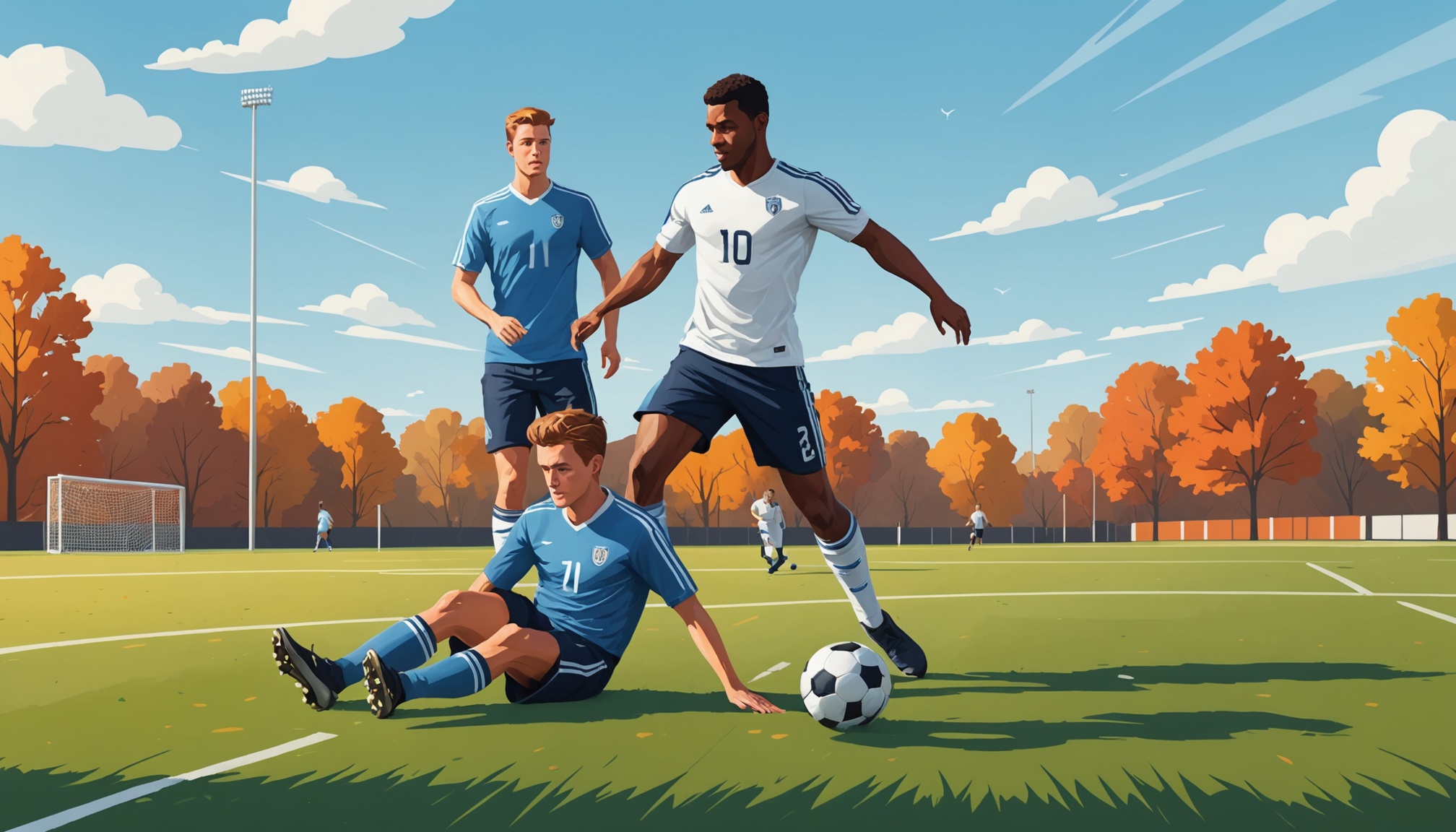
Fall Sports Season: Staying Ahead of Soccer and Football Injuries
Cooler temperatures bring soccer and football into full swing — and a predictable wave of sprains, strains, and overuse injuries. Here is what the research suggests and how to stay in the game.
Why Autumn Raises the Injury Risk
When the school calendar flips and temperatures drop, fields fill quickly with athletes of all ages returning to competitive play. The combination of renewed intensity, inconsistent summer conditioning, and harder turf conditions creates a familiar pattern: injury rates tend to climb in the first few weeks of the season. Understanding the patterns behind these injuries is the first step toward preventing them.
Cooler air can also give athletes a false sense of endurance. Because heavy exertion feels more comfortable in mild weather, it is easy to push harder and longer than the body is ready for — particularly early in the season when training loads are rapidly increasing.
Common Injuries in Soccer and Football
Soccer and football share several injury categories despite their differences in contact level and movement patterns.
Ankle sprains are among the most frequent injuries in both sports. Rapid direction changes, uneven turf, and collisions all place rotational stress on the lateral ankle ligaments. Without adequate ankle stability and proprioceptive training, re-injury rates remain high after even a mild sprain.
Hamstring and hip flexor strains are a recurring problem, especially in sports that demand explosive acceleration and deceleration. Research suggests that athletes who neglect eccentric hamstring strengthening — the kind that loads the muscle while it lengthens — are at elevated risk compared to those who include it in their training.
Knee injuries, including medial collateral ligament sprains and anterior cruciate ligament tears, represent some of the most serious risks in both sports. Landing mechanics, neuromuscular control, and core stability all influence how much load travels through the knee during cutting and jumping movements.
Overuse conditions such as shin splints, patellar tendinopathy, and Achilles irritation tend to emerge gradually when training volume increases faster than tissue tolerance allows. These injuries often go ignored in the early stages, which is precisely when they are most responsive to conservative care.
Additional injuries worth noting include:
- Turf toe and metatarsal stress reactions in soccer players on artificial surfaces
- Shoulder separations and stingers in football linemen and tacklers
- Cervical strain from heading in soccer and blocking in football
- Groin strains from lateral cutting movements common to both sports
The Role of the Pre-Season and Warm-Up Period
Many autumn injuries are connected not to a single traumatic event but to preparation habits in the weeks before the season begins. Athletes who transition directly from low-activity summers into full-practice intensity compress the adaptation window that soft tissue, tendons, and bone need to handle increased load.
A structured warm-up is one of the most well-supported injury-reduction strategies in sports medicine. Dynamic movement preparation — leg swings, hip circles, walking lunges, and lateral shuffles — elevates tissue temperature and primes the neuromuscular system in ways that static stretching alone does not. Research suggests that programs combining dynamic warm-up, balance training, and landing mechanics education may help reduce lower-extremity injury risk in youth and adult athletes alike.
Cool-down routines matter as well. Spending even five to ten minutes on light walking and gentle static stretching after practice helps the nervous system transition out of high-output mode and supports tissue recovery between sessions.
Prevention Strategies That Hold Up on the Field
Prevention is not a single intervention — it is a collection of habits layered together.
Strength and stability work off the field. Single-leg exercises such as Bulgarian split squats, single-leg Romanian deadlifts, and step-up variations build the hip and knee stability that directly protects against non-contact injuries during play.
Proprioceptive and balance training. Balance board work, single-leg stance drills, and perturbation exercises retrain the nervous system to respond quickly to unexpected surfaces and contact — a major factor in reducing ankle sprain recurrence.
Progressive load management. Coaches and athletes benefit from tracking training volume across the week and season. The general principle is to avoid increasing overall weekly load by more than roughly ten percent at a time, allowing connective tissue to adapt gradually.
Adequate recovery between sessions. Sleep quality, nutrition timing around training, and hydration all influence how effectively muscle and connective tissue repairs between practices and games. These are not optional extras — they are foundational to staying healthy through a long season.
Appropriate footwear and equipment. Cleat type and fit affect ground-contact forces and rotational grip on the turf. Replacing worn footwear and ensuring proper equipment fit — including helmet sizing and padding in football — reduces both acute and repetitive stress on joints.
When to Seek Professional Evaluation
Not every ache needs clinical attention, but certain signs warrant a prompt evaluation rather than a wait-and-see approach. Swelling that develops quickly after an injury, pain that alters your gait or throwing mechanics, numbness or tingling following a collision, or discomfort that persists beyond two weeks of relative rest are all reasonable prompts to have a qualified clinician assess what is happening.
Chiropractic and physical therapy care can play a meaningful role in both the acute and recovery phases of sports injuries. Manual therapy techniques may help restore joint mobility after sprains and strains, while targeted rehabilitation exercises rebuild the strength and movement patterns that protect against re-injury. Many athletes find that returning to sport with a structured rehab plan rather than simply resting until pain subsides leads to a more durable outcome.
Early intervention also allows a clinician to identify contributing factors — hip weakness, altered movement patterns, or thoracic stiffness — that may not feel related to the injury site but influence how load is distributed across the whole kinetic chain.
If this fall season has brought a new injury or a nagging problem that keeps returning, a consultation with a sports-oriented chiropractor or physical therapist is a practical next step toward getting back to the game you enjoy.