
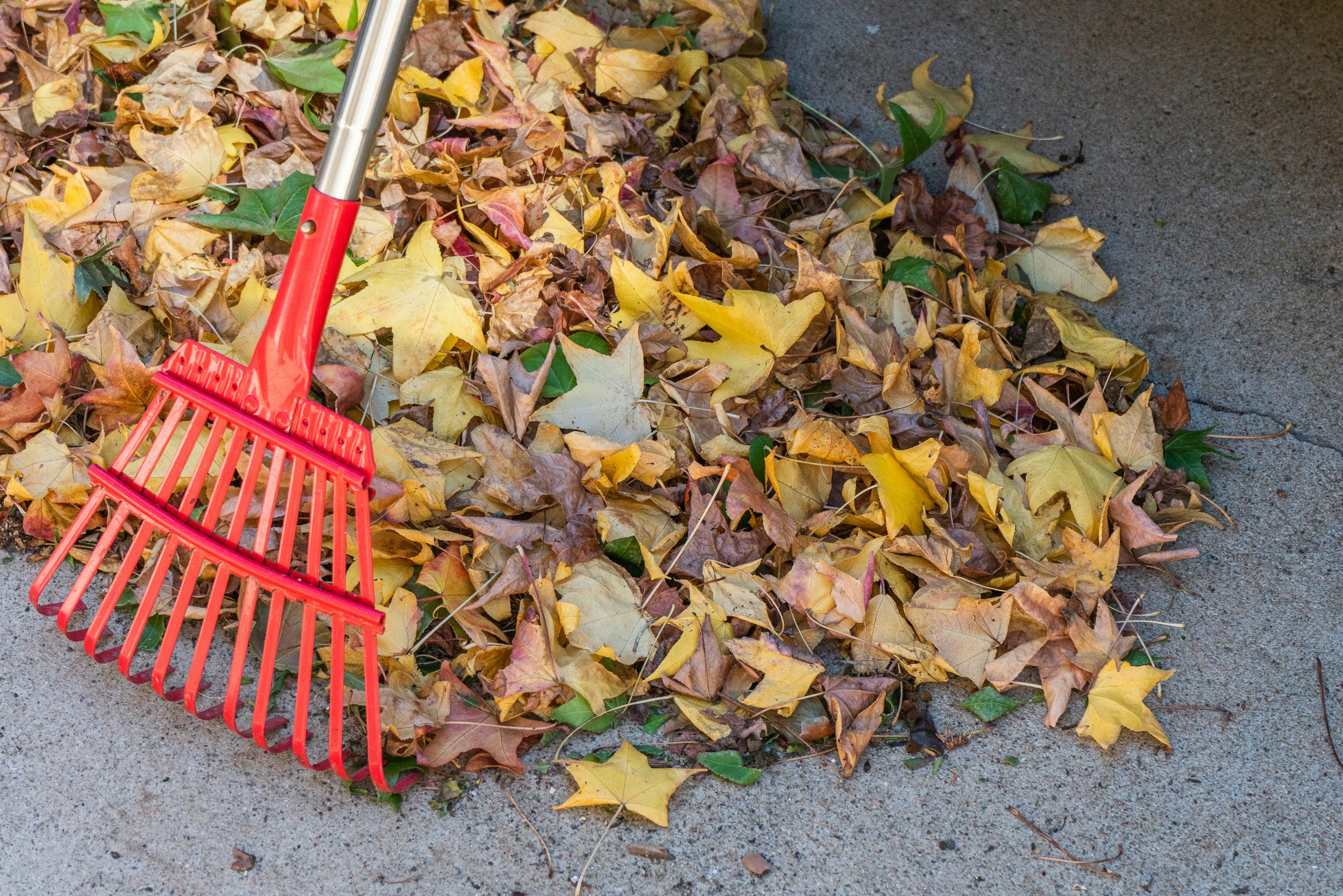
Fall Yard Work Without the Back Pain: A Chiropractor’s Guide to Raking, Lifting and Leaf Season
Raking, bagging and hauling leaves is real exercise, and it sends thousands of people to the ER every fall with back strains. Here’s how to warm up, move smarter and finish leaf season stronger instead of sore.
Every October the phone at our Bernardsville office starts ringing with the same story: “I was fine until Saturday. I spent four hours raking and bagging leaves, and on Sunday morning I couldn’t get out of bed.” Fall in New Jersey is beautiful, but those oaks and maples drop an enormous amount of work on our lawns, and most of us tackle it the way we’d never tackle a workout: cold, all at once, and twisting the same direction for hours. The good news is that yard work is genuinely good exercise. With a little preparation and smarter mechanics, leaf season can make you stronger instead of sending you to the couch with an ice pack.
Here’s what actually happens to your back when you rake, why some people get hurt and others don’t, and a simple plan for finishing the season pain-free.
• ~7,700 — estimated U.S. ER visits from leaf-raking injuries in 2025, based on CPSC injury data
• 1 in 4 — raking-exertion ER visits that involve the lower back, the most common injury type
• 4.0 METs — the effort of moderate raking, the same intensity range as doubles tennis or a brisk walk
• ~300 — calories per hour a 170–180 lb adult burns raking at a steady pace
Why Raking Is Harder on Your Back Than It Looks
Raking seems gentle. You’re just pulling a lightweight tool across the grass. But look closely at the motion: you lean forward at the waist, reach out with your arms, pull back while rotating your trunk, then repeat that same twist, usually to the same side, hundreds or thousands of times. Add bending to gather piles, lifting heavy, damp bags, and hauling tarps across the yard, and you have a repetitive flexion-and-rotation workload that your spine may not have seen since last November.
The lumbar spine is built to handle load, but it does best when the load is shared by the hips, legs and deep core muscles. When we bend from the waist instead of the hips and rotate through the low back instead of pivoting our feet, the small joints and discs of the lower spine take a disproportionate share of the stress. Do that long enough, especially with tired muscles, and the result is the classic Sunday-morning muscle spasm or, in some cases, an irritated disc.
There’s also the “weekend warrior” factor. Many people have spent the summer sitting at a desk, in a car, or on a beach chair. Their hamstrings are tight, their hips are stiff, and their back muscles aren’t conditioned for three straight hours of work. Raking is considered moderate-intensity exercise, roughly 4 METs, so it deserves the same respect you’d give a tennis match or a long hike.
The Yard Work Risk Map
Not every fall chore is equally hard on the spine. Here’s how the common ones stack up, and the single biggest fix for each.
• Raking: Repetitive twisting. Switch your lead hand every few minutes and step your feet instead of rotating your low back.
• Bagging & Lifting: Highest risk moment. Squat to the bag, keep it close to your body, and fill bags only halfway when leaves are wet.
• Wheelbarrows & Tarps: Push rather than pull when you can, and keep loads modest. Two light trips beat one heavy one.
• Leaf Blowers: Less bending, but backpack blowers load the spine for long periods. Adjust both straps snugly and take breaks.
• Gutters & Ladders: Falls, not strains, are the danger. Move the ladder rather than overreaching, and have a spotter.
• Planting Bulbs & Mulch: Long periods kneeling or bent over. Use a kneeling pad and change position every 10–15 minutes.
• Lower risk: Leaf blowing (with a properly fitted harness), light pruning, mowing with a self-propelled mower
• Moderate risk: Continuous raking for more than an hour, kneeling to plant or weed, pushing a loaded wheelbarrow
• Higher risk: Lifting heavy wet leaf bags, dragging loaded tarps, overreaching from ladders, twisting while lifting
Warm Up Like You’re Heading to the Gym
Five minutes of preparation is the single most effective thing you can do. Cold muscles and stiff joints are less able to absorb load, and research on sports injury prevention consistently shows that a short dynamic warm-up reduces strain injuries. Before you grab the rake, try this sequence:
• Brisk walk around the yard for 2–3 minutes to raise your heart rate and body temperature.
• Hip hinges: hands on hips, push your hips back and return to standing, 10 times. This grooves the movement you’ll use all afternoon.
• Standing trunk rotations: arms crossed, gently turn side to side, 10 each direction.
• Bodyweight squats or sit-to-stands: 8–10 reps to wake up the glutes and legs.
• Arm circles and shoulder rolls to prepare the upper back and shoulders for reaching.
Rake Smarter: Mechanics That Protect Your Spine
How you move matters more than how much you do. These small changes shift the work from your lower back to the big, strong muscles of your hips and legs.
• Use a “scissor” stance. Stand with one foot forward and one back, knees slightly bent, and shift your weight from front to back leg as you pull. Your legs do the work, not your back.
• Switch sides often. Every five to ten minutes, swap which hand is on top and which foot is forward. This is the most overlooked tip, and it keeps one side of your back from doing all the work.
• Keep the rake close. Long, overextended reaches multiply the load on your spine. Take shorter strokes and move your feet.
• Choose the right tool. A rake with a handle that reaches roughly your chin, an ergonomic bent handle, or a wide no-clog head can cut the number of strokes and the amount of bending.
• Bend at the hips and knees to gather. When you scoop leaves into a bag or tarp, squat or kneel on one knee. Never bend and twist at the same time.
• Lift smart. Keep bags close to your body, brace your core, exhale as you lift, and turn by pivoting your feet. Smaller, half-full bags are kinder to your discs than overstuffed ones, especially when leaves are wet and heavy.
Dr. Don’s Rule of 20: Work in roughly 20-minute blocks. At the end of each block, stand tall, put your hands on your low back and gently lean back 5 times, take a short walk, and drink some water. Spreading a big yard over two or three shorter sessions during the week is far easier on your spine than one marathon Saturday.
Pace Yourself: A Leaf-Day Timeline
• Night before: Get a good night’s sleep and hydrate. Your spinal discs rehydrate overnight and are best able to handle load after you’ve been up and moving for an hour or so.
• First 5 minutes: Dynamic warm-up: walk, hip hinges, trunk rotations, squats and arm circles.
• Every 20 minutes: Switch sides, stand and extend, walk, and sip water. Check in with your body: tightness is a signal, not a challenge.
• Bagging time: Squat, keep loads close, and fill bags halfway. Ask for help with anything heavy or awkward.
• Right after: A gentle cool-down walk plus light stretches for hips, hamstrings and chest. Avoid collapsing onto the couch for hours.
• Next morning: Mild, general muscle soreness is normal. Sharp, one-sided, or radiating pain is not, and deserves attention.
After the Leaves: Recovery That Actually Helps
Once you’re done, the goal is to keep things moving. Long periods of sitting right after heavy yard work can let muscles stiffen and guard. A 10-minute walk, followed by gentle stretches such as a knees-to-chest stretch, a figure-four hip stretch, and a doorway chest stretch, helps your tissues settle down. If you’re achy, gentle heat on tight muscles that evening can feel soothing; if you’ve tweaked something and it feels hot or acutely sore, a short cold application may be more comfortable in the first day or two.
Nutrition and hydration matter too. Raking burns roughly 300 calories an hour for many adults, and you lose more fluid than you think on a crisp, dry fall day. Water, a protein-rich meal, and a good night’s sleep are all part of how your muscles and connective tissues repair.
When Soreness Is More Than Soreness
Most post-yard-work aches are muscular and fade within a few days, especially if you stay gently active. But some symptoms suggest something more than an overworked muscle and are worth having evaluated:
• Pain that travels down the buttock or leg, especially below the knee
• Numbness, tingling, or weakness in a leg or foot
• Pain that is getting worse instead of better after 2–3 days
• Back pain that wakes you at night or doesn’t change with position
• Seek emergency care for loss of bladder or bowel control, numbness in the groin or inner thighs, or back pain after a fall from a ladder
For the common mechanical strains and joint irritation that follow a weekend of yard work, conservative care is often very effective. A chiropractic evaluation can identify which joints and muscles are irritated, restore motion where the spine has stiffened, and give you specific exercises so the problem doesn’t return every fall.
Turn Leaf Season Into a Strength Season
Here’s the bigger picture: yard work is functional fitness. Pushing, pulling, squatting, carrying and rotating are exactly the movements that keep us independent as we age. The people who glide through leaf season tend to be the ones who strengthen their hips, glutes and core year-round. If raking leaves you sore every fall, that’s useful information. It tells you where your body needs more support, and it’s an invitation to build that strength before next year’s leaves come down.
So warm up, switch sides, lift with your legs, take breaks, and enjoy the crisp air. Your lawn and your spine can both look great by Thanksgiving.
Raking Left You Sore? At AHPTS in Bernardsville, we help patients recover from seasonal strains and build the strength and mobility to prevent them. If your back is talking to you after leaf season, let’s find out why and get you moving comfortably again. Call or book online at ahpts.com/contact.
This article is for educational purposes and isn’t a substitute for individualized medical advice. If you have severe, worsening, or radiating pain, or any of the emergency symptoms listed above, contact a healthcare provider promptly.